Thursday, January 8, 2026
Dual Licensing for Real Estate Agents in Raleigh-Durham, NC: Why 2026 Is the Year
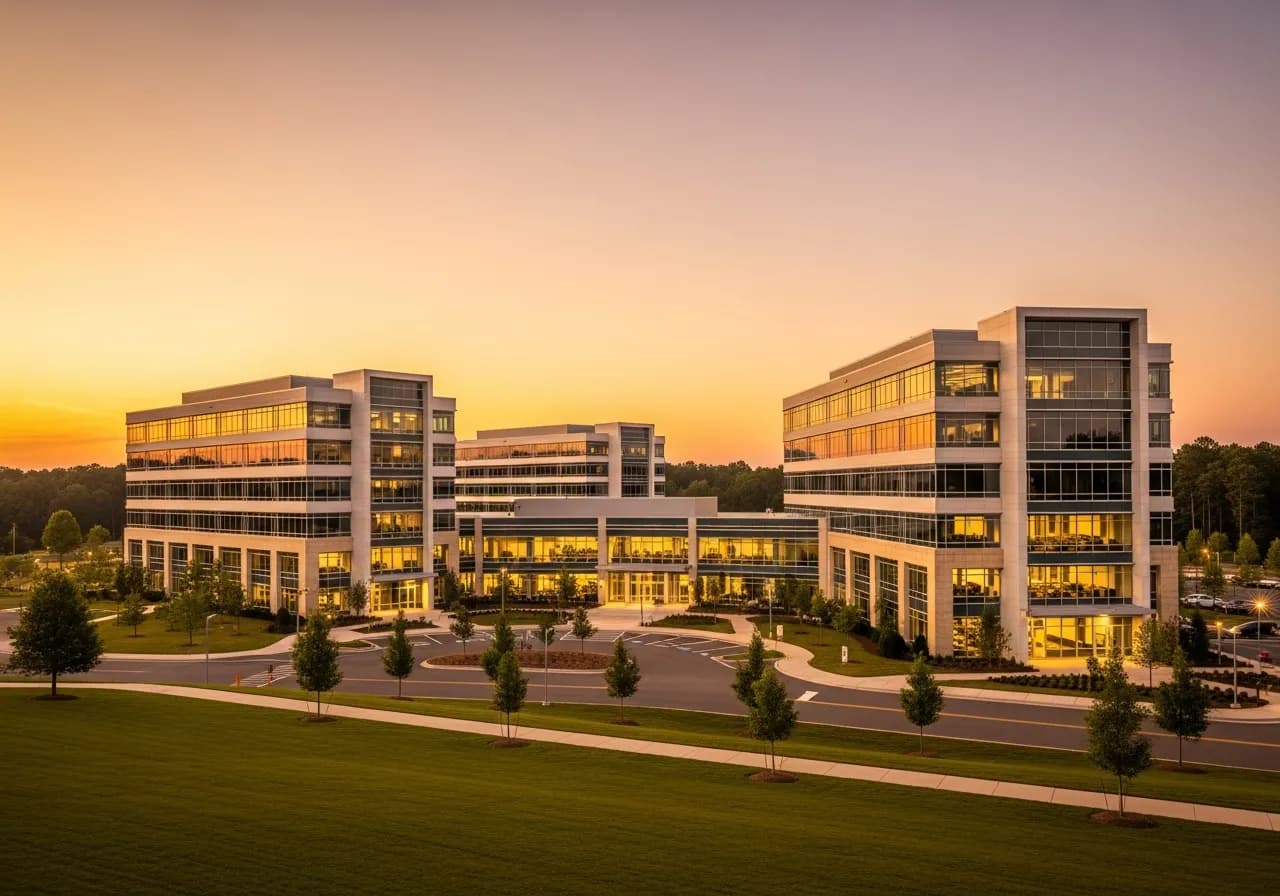
The Triangle's tech-driven population boom brings high-income buyers who expect seamless service. Raleigh is gaining an average of 66 new residents daily, and the metro has expanded 10.2% since 2020, far outpacing the national growth rate of 2.6%. With a median home price of approximately $425,000 and inventory up over 20% year-over-year, the market is shifting toward balance. Dual-licensed agents in Raleigh-Durham can offer a one-stop experience that matches the sophistication these relocating professionals expect. The Triangle is projected to add 147,718 jobs by 2032, with healthcare and life sciences leading the way. For agents who want to participate in the financing side of these transactions, not just the property side, 2026 presents an ideal window to get licensed.
The Raleigh-Durham Real Estate Market in 2026
The Triangle market has transitioned from extreme seller dominance to a more balanced environment. Wake County recorded 3,528 active listings in January 2026, a 20.9% increase over the prior year, while the median home price settled at $450,000. Across the broader Triangle, median prices have stabilized near $425,000 after years of rapid appreciation.
Days on market have extended to 46 days in Wake County, with some areas like Raleigh proper reaching 74 days. Inventory has surged in high-growth suburbs like Cary, Apex, and Morrisville, where active listings jumped 63.7%. The list-to-sale ratio has declined to approximately 99%, meaning homes are closing at or slightly below asking price rather than commanding the premiums seen in 2022 through 2024. Price reductions have become more common, with 17.2% of Raleigh listings seeing price cuts in January 2026.
According to Doorify MLS (formerly Triangle MLS), the region generated $19 billion in total sales volume in 2025. The National Association of REALTORS identified Raleigh as one of ten housing hotspots for 2026, citing the alignment between income growth (6.6% year-over-year) and housing costs. Durham's median price sits at $371,000, while Chapel Hill sustains $492,000, creating a wide range of financing needs across the metro.
Why Raleigh-Durham Agents Are Adding Mortgage Licensing
Tech-sector relocations demand integrated service. Research Triangle Park continues to attract transformative investment. Biogen committed $2 billion to a new facility in RTP, Novo Nordisk invested $4.1 billion in nearby Johnston County, and FUJIFILM Biotechnologies opened the first phase of a $3.2 billion manufacturing facility in Holly Springs. These investments bring high-income professionals who expect a streamlined buying experience. Agents who can coordinate both property search and financing stand out immediately.
The market rewards financing expertise. With mortgage rates stabilizing near 6.0 to 6.2%, NAR estimates that nearly 27,000 additional Raleigh households could qualify for a median-priced home if rates reach 6%. Dual-licensed agents who understand how rate changes affect qualification can guide clients through this shifting landscape. That is a skill set most agents already have the foundation for.
New construction is reshaping competition. Builders in Wake County are offering rate buydowns, closing cost assistance, and design credits ranging from $20,000 to $40,000. Resale agents need sophisticated financing knowledge to help clients compare these incentives against existing home options. Dual-licensed agents can run side-by-side analyses that single-licensed competitors cannot.
Agent density demands differentiation. Raleigh ranks seventh nationally in real estate agent concentration, with approximately 10,940 agents in the metro. In a market this crowded, adding mortgage origination services creates a meaningful competitive advantage and opens additional revenue streams.
North Carolina MLO Licensing Requirements
The path to mortgage licensing in North Carolina is designed to be accessible for working professionals. The state requires 24 hours of pre-licensing education: 4 hours of NC statutes and regulations, 3 hours of federal law, 3 hours of ethics (covering fraud, consumer protection, and fair lending), 2 hours of nontraditional mortgage products, and 12 hours of electives.
After completing the coursework, you must pass the SAFE MLO national exam through the NMLS. North Carolina does not require a separate state exam. Annual continuing education totals 8 hours, including 1 hour of NC-specific content. The North Carolina Commissioner of Banks administers all mortgage licensing in the state.
Most agents complete the entire process in 30 to 60 days, fitting coursework around their existing client commitments. If you already hold a valid MLO license in another state, North Carolina offers reciprocity for 20 hours of education, requiring only the 4-hour NC statutes course.
See Your Potential in Raleigh-Durham
Curious what dual licensing could mean for your Triangle business? Use our estimator to explore illustrative scenarios based on your annual buyer volume.
Mortgage Earnings Estimator
See what you've been leaving on the table.
Used to estimate average loan size.
May vary based on production volume and compensation plan
Estimated additional loan originator compensation
$0
Based on $2,975,000 in estimated loan volume
Illustrative range: $5,950 – $22,313 at 20–75 bps
For real estate and mortgage industry professionals only. This estimator is for illustrative business planning purposes and does not constitute a loan offer, rate quote, compensation agreement, or guarantee of earnings. Actual compensation is determined by licensing status, services performed, the applicable lender compensation plan, production volume, and state and federal regulations. Equal Housing Opportunity.
These figures are illustrative only. Actual compensation depends on licensing status, services performed, and lender compensation plans. Borrowers are free to choose any lender.
What Dual-Licensed Agents in Raleigh-Durham Do Differently
In the Triangle, dual-licensed agents leverage the market's unique characteristics to provide superior client service.
For tech relocations, they coordinate employment verification with pre-approval timing. Many tech professionals have complex compensation structures involving stock options, restricted stock units, and signing bonuses. Dual-licensed agents understand how these income sources affect qualification and can navigate underwriting requirements without the delays that come from agent-to-lender handoffs.
For first-time buyers, the Triangle's affordability challenges make financing guidance essential. With only 10% of Wake County homeowners aged 35 or younger, entry barriers are real. Dual-licensed agents can discuss down payment strategies, rate buydown options, and state programs like the NC Home Advantage program during the property search itself, not as an afterthought.
For move-up buyers in premium areas, communities inside the Raleigh beltline, Cary, and Apex continue to attract multiple offers. Dual-licensed agents who manage financing and property strategy simultaneously help clients move faster and with greater certainty, which is exactly what it looks like day to day for dual-licensed professionals.
The Triangle's infrastructure development further amplifies these advantages. The Complete 540 highway expansion, a $2.3 billion project scheduled for 2028 completion, will reshape commute patterns and open new residential corridors in southern Wake County. Dual-licensed agents who understand how infrastructure changes affect property values and buyer qualification can position clients in emerging growth areas before prices adjust.
Agents in the Triangle are also well positioned to cross-refer clients to other NC metros. See how the opportunity compares in Charlotte and Wilmington.
Getting Started in Raleigh-Durham
First step, before any coursework: get your NMLS number. It is free and takes about fifteen minutes, and you cannot enroll for the SAFE exam without it.
The Triangle's combination of tech-driven growth, rising inventory, and sophisticated buyers makes 2026 the right time to pursue dual licensing. Here is how to start:
- Complete 24 hours of NMLS-approved pre-licensing education, available online or through local providers.
- Pass the SAFE national exam and apply through NMLS.
- Align with a mortgage company that supports dual-licensed agents with compliance infrastructure, technology, and competitive compensation plans.
The Raleigh Regional Association of REALTORS and Durham Regional Association of REALTORS offer professional development resources, and the NCCOB maintains current licensing requirements. With 10,940 agents competing for Triangle business, the ones who differentiate through expanded service offerings will capture disproportionate market share in the years ahead. Ready to explore whether dual licensing is worth it for your Triangle business?
Ready to add mortgage to your business?
We help real estate agents get licensed and connected with the right lending partner. No pressure, no commitment.